Coming soon · Release date: November 13, 2026
UpdatedWarrior Quest Armor Guide: Gear, Forge Upgrades and Loot
Warrior Quest armor explained: starting gear, forge upgrades, the traveling salesman's rarity cards, and how to loot or bargain your way to better gear.
Jump to
How Gear Works in Warrior Quest
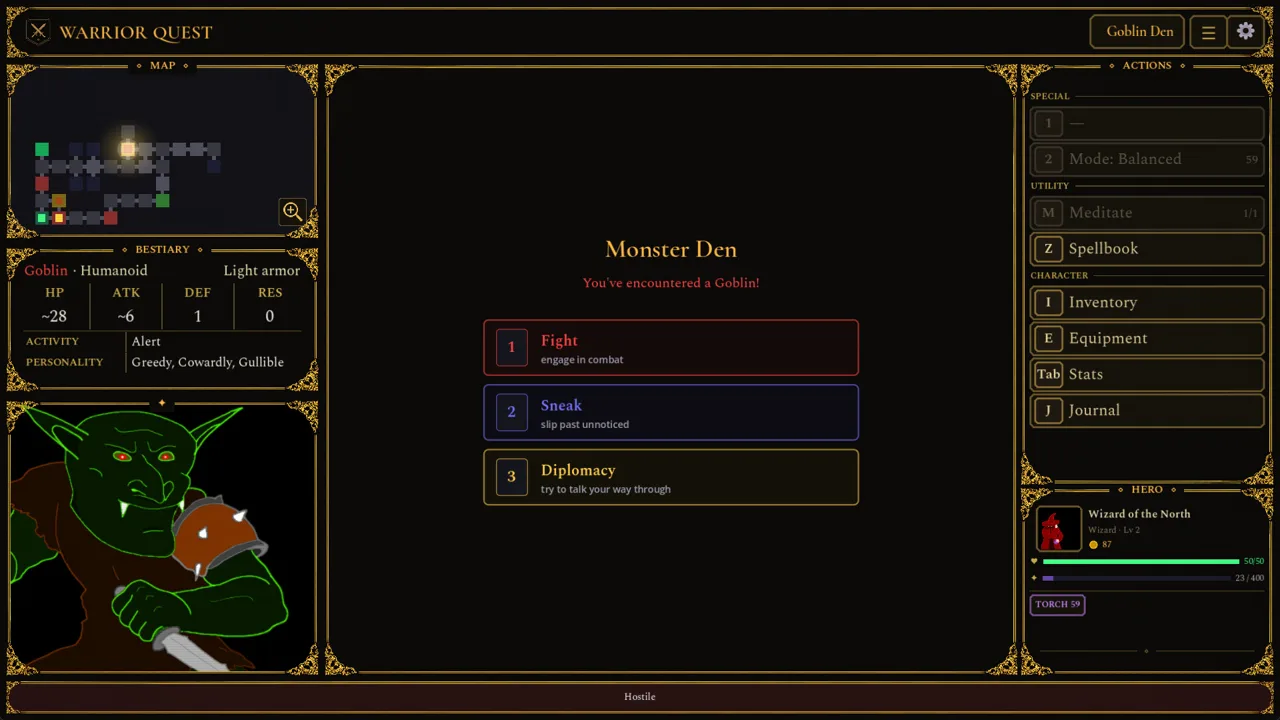
In a dungeon crawler where you can bribe, threaten, or bluff a goblin, Warrior Quest armor is only one way to survive. It still matters, because the game tracks your abilities, your gear, and every deal you strike, and then the dice decide what works.
A Warrior starts out with a weapon and a set of armor in the equipment panel. Your class (Warrior, Thief, or Wizard) shapes your abilities and equipment preferences. It doesn't lock you into a playstyle, so a heavily armored Warrior can still bluff and bargain like anyone else.
Warrior Quest launches on November 13, 2026 for Windows, macOS, and Linux. The free demo covers Act I, takes about an hour, and your save carries over to the full release, so any gear you earn there is worth keeping. You can wishlist or grab the demo on the Warrior Quest Steam page.
Upgrading Your Kit at the Crowhollow Forge
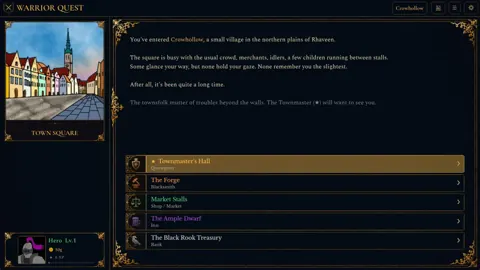
Crowhollow is your hub between delves. When you take your first job, the Townmaster tells you to visit the blacksmith or the market before you head out. That advice is worth following.
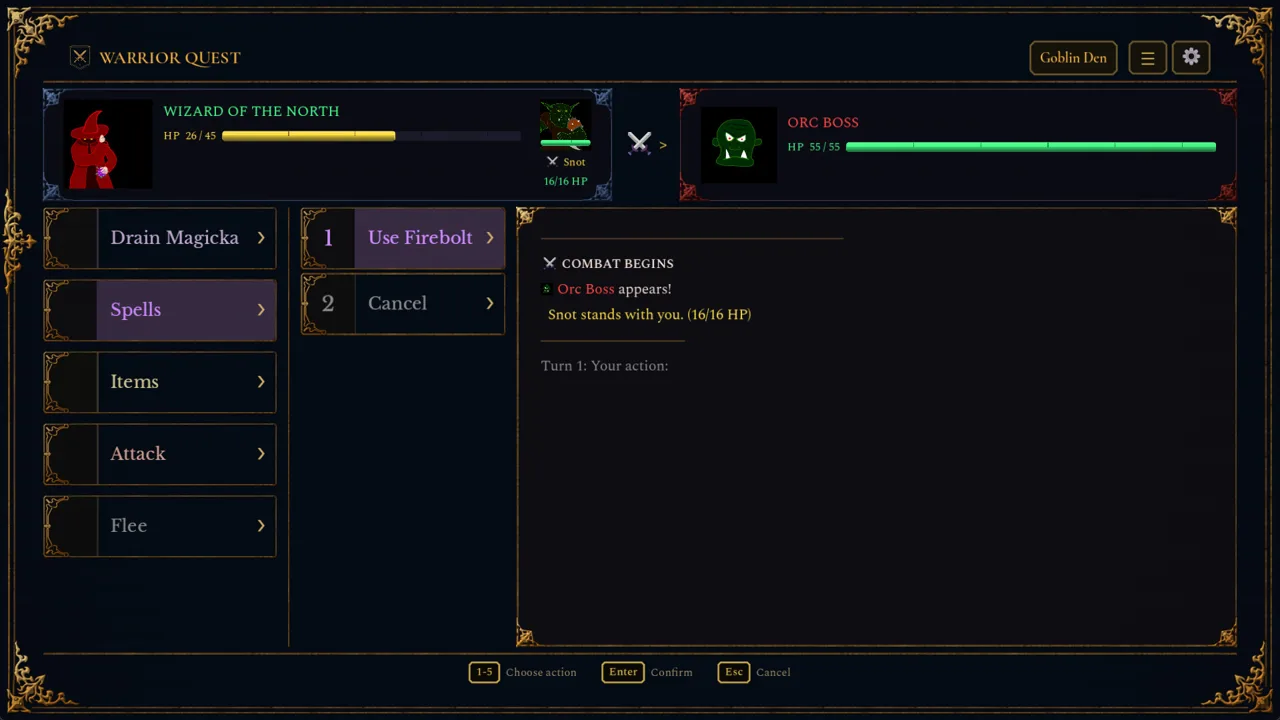 Image: Steam / Wizard of the North
The forge upgrades the gear you already own, and you pay gold for each upgrade. Rings and necklaces can be bought in town and upgraded as well. A few things to keep in mind:
- Spend between dungeons, not before you know your build. Gold is tight early on. You may not be able to afford a ring and a necklace in the same trip, so choose the one that supports how you actually play.
- Sell what you've outgrown. If a piece of chain mail doesn't fit your plan, sell it and put the gold into upgrades for the gear you'll keep.
- Keep some coin for consumables. The market sells potions, antidotes, and tools. Since Demo Update 1.5, it stocks two torches per restock. Poison shows up in later dungeons such as the pirate hideout, and since Update 1.3 the game gives you an antidote hint the first time you're poisoned. Budget for an antidote before you head out.
Demo Update 1.11 also redesigned the item panels and fixed a bug where picking a forge upgrade shifted the town interface.
The Traveling Salesman and Item Rarity
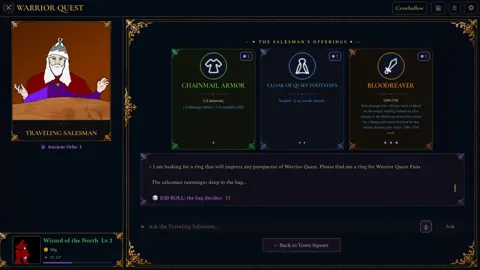
Sometimes a crooked-wheeled wagon appears in town that wasn't there an hour earlier. Its merchant deals in odder goods than the market does, and you can describe the kind of item you're after in your own words.
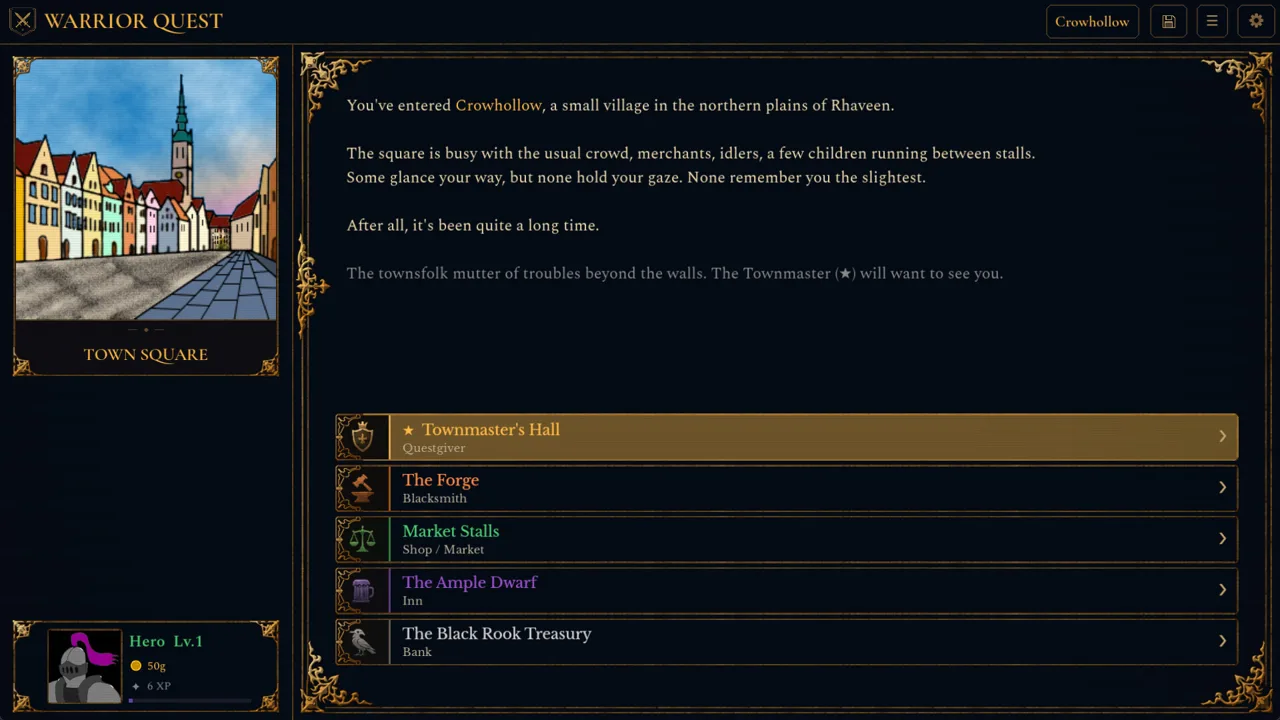 Image: Steam / Wizard of the North
Since Demo Update 1.11a (October 18, 2026), the salesman's item cards use rarity colors and symbols. That makes it much easier to compare his wares at a glance. Check the rarity marker before you spend.
The salesman also trades. One adventurer handed over a mysterious orb found in the Goblin Den and walked away with a keen-strike weapon. It upgraded their damage from 1d8 + Strength + 1 to 2d8 + Strength. Hold on to strange curios you find in dungeons, because they can be worth more as trade goods than as inventory filler.
Since Demo Update 1.4, you can hover over loot names to see an item's description and stats before you commit to anything.
Finding Gear in Dungeons
Shops aren't the only source of equipment. Dungeons reward a thorough sweep.
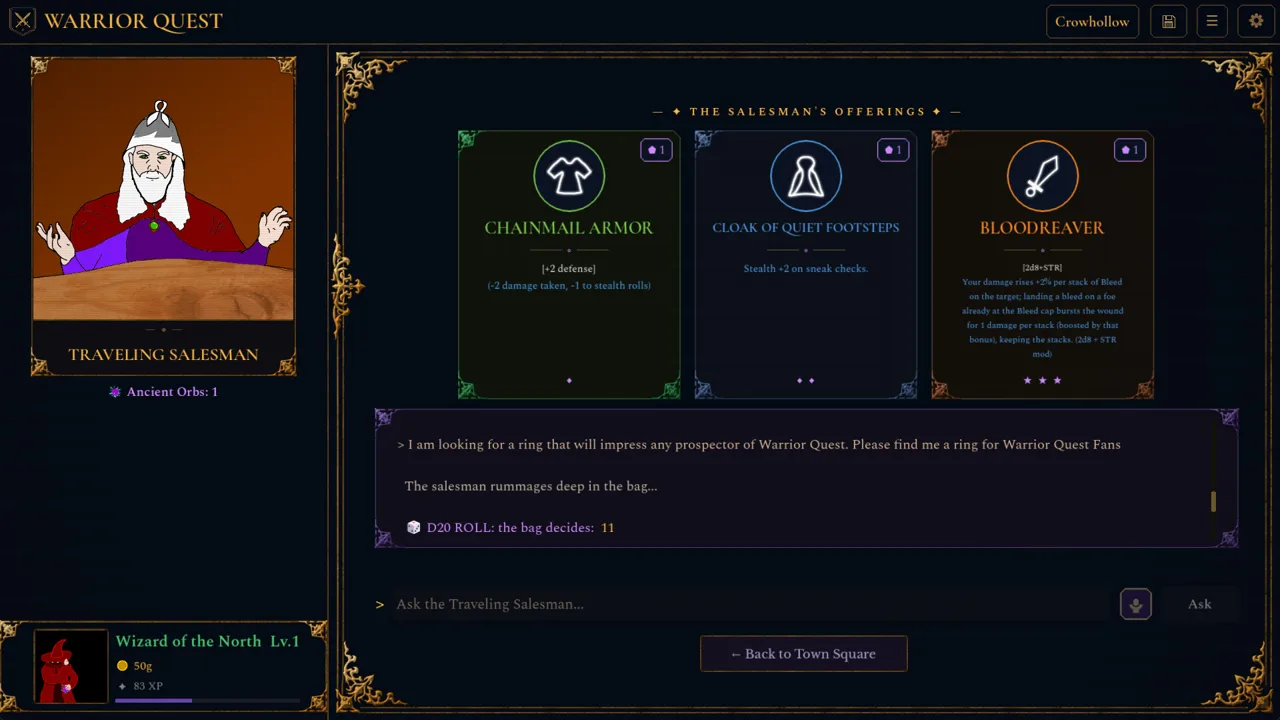 Image: Steam / Wizard of the North
- Chests: Locked chests can be picked or smashed. Smashing breaks the lock, but it damages what's inside. Since Update 1.11, locked-chest cards show your chosen method, its difficulty, and how many lockpicks you have left. Bring lockpicks if you care about the contents.
- Traps: Investigative exploration mode, added in 1.5, helps you spot traps but takes more time per step. Use it in rooms that look like treasure vaults.
- Hidden chambers and shrines: Sealed side rooms often hold extra treasure, and shrines can grant temporary blessings.
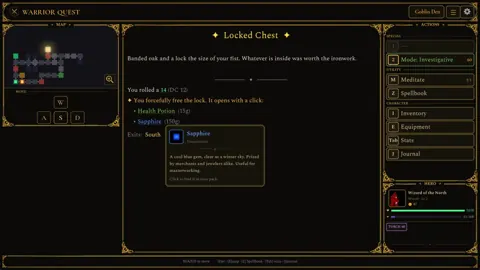
- Creatures: Sneaking past a creature can give you a chance to pick its pocket; one Warrior fished out pocket sand that way. Since 1.4, creatures have their own inventories, so what they carry is real loot.
- Flavor rooms: The interactive rooms added in 1.5 hold more things to collect.
Bargaining for Equipment
This is where Warrior Quest stops being a standard loot crawler. Diplomacy runs on the same engine as everything else, so you can try to talk gear out of people:
- Demand an item outright, or offer gold or items in exchange. Contests and wagers are also options, riddles included.
- Watch the mood indicator during conversations. A frightened creature may agree to hand something over, but agreeing to it isn't the same as giving it to you. Check your inventory afterward.
- Recruited companions carry their own gold and items, including anything they bring when they join and gifts you give them, as of Update 1.6. If a companion falls, their recovered belongings appear on the victory card.
Managing Your Inventory and Gold
Hoarding is easy in Warrior Quest. Since 1.5, inventory capacity is 500 slots, up from 255.
Update 1.9b added a gold display to the inventory and made your gold easier to see on the hero panel, so you can check your budget before you walk into the forge.
The Black Rook Treasury in Crowhollow pays interest on completed dungeons. Banking spare coin between runs helps you afford the next round of upgrades. Patch 1.9b also fixed a bug where that interest was paid out more than once for the same dungeon.
Continue with
 Warrior Quest Best Weapons: Early Tier List for Act IWarrior Quest best weapons ranked: the 2d8 Keen Strike weapon, forge-upgraded swords, hard-hitting abilities, and the dirty tricks that win Act I fights.
More in Items
Warrior Quest Charms Guide: Rings, Trinkets and Merchants
Warrior Quest charms guide: where to find rings, necklaces and trinkets at the forge and the wandering merchant's wagon, plus loot tips. Then roll well.
Warrior Quest Chest Guide: Locks, Traps, and Loot Tips
Every Warrior Quest chest is a dice roll. Learn how locked and trapped chests work, when to smash or pick a lock, and how rerolls save your best loot.
Warrior Quest Items Guide: Gear, Loot, Gold and Chests
Our Warrior Quest items guide covers shops, chests, lockpicks, gold, bribes and companion gear in Crowhollow. Learn how to loot smarter before you roll.
Warrior Quest Lockpicks: How to Open Locked Chests Safely
Warrior Quest lockpicks decide whether a locked chest opens cleanly or gets smashed. Learn how the chest card, rerolls, and trap checks work underground.
Continue exploring
Join the community
Official channels for news, updates and player help: